One is left to wonder whether this quintessentially 19th-century American poet would be tickled to be the fearless bearded leader of our century's sordid revolutions. Vendler has her doubts, and so do I.
Generative (adj): 1. Of or relating to the generation of offspring; having the power or function of reproducing; procreative, reproductive. Also fig. and in extended use. 2. That generates, produces, or gives rise to something, or has the power or ability to do so; productive, creative; originating, causative.
Showing posts with label Ralph Waldo Emerson. Show all posts
Saturday, July 3, 2010
World Wide Whitman, or That Cat Had Some Wit, Man.
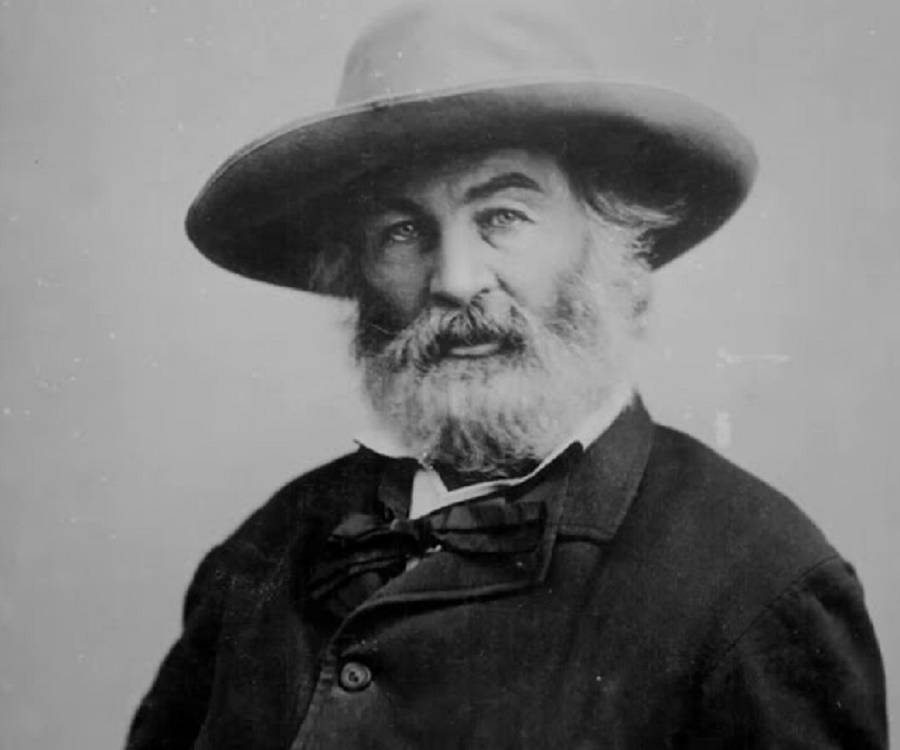
In a NYTimes article by inimitable critic Helen Vendler called "Singing the Poet Electric," Vendler is part ingratiating and part on a mission to correct poet C. K. Williams in his quest to eulogize Walt Whitman in a second book of the series Writers on Writers, put out by Princeton University Press. The book, while simply called On Whitman , doesn't take such a simple stance, according to Vendler. Nay, Williams, who is writing a rather touched kind of prose, ascribes Whitman to something of a, as Vendler calls it, "patron" to the 60s revolution and subsequently, the Beat generation.

One is left to wonder whether this quintessentially 19th-century American poet would be tickled to be the fearless bearded leader of our century's sordid revolutions. Vendler has her doubts, and so do I.
Friday, July 2, 2010
Nerding Out Fridays
Yesterday I decided I would commit to reading all of T. S. Eliot's essays; it however occurred to me that my reference point for all of the Spanish tragedies and even Elizabethan tragedies is, how do you say, lacking. It could be that I am not yet of a status where esoteric knowledge comes as a easily as a magician pulling a rabbit out of a hat. Nay, instead, I merely salivate at the D-I-Y magic kits made tantalizing by clever infomercials—or to snuff out this measly metaphor, there is something of a pomp sans circumstance to being limited as a reader. I try and follow, can't, but then find myself furiously underlining an idea regardless, an idea that stands glimmering in its abstract gooeyness. After a diatribe about Elizabethan and Jacobean poetry in the essay "Rhetoric" and Poetic Drama , Eliot says, "At the present time there is a manifest preference for the 'conversational' in poetry—the style of 'direct speech,' opposed to the 'oratorical' and the rhetorical; but if rhetoric is any convention of writing inappropriately applied, this conversational style can and does become a rhetoric—" These moments are head-wrappable, in the sense that this remains applicable to an audience interested in the evolutionary tract of literature, even if that interest comes with a certain lack of resources. One can see that designations of device and even tautologies are malleable, appropriated based on the current temperament of the scene.
Subscribe to:
Posts (Atom)